Turbine Air Starters
Turbine Air Starters by Ingersoll Rand deliver industry leading performance, reliability, and quality the you can count on.
Call us now at 1-800-353-4676 with your engine specs and requirements and we'll find the BEST starter for you!


Ingersoll Rand Turbine Pneumatic Air Starters are built to provide reliable performance under the most demanding conditions. The differences between the turbine motor and the vane motor are significant. The turbine motor is lighter in weight, does not need lubrication, and has a tremendous amount of stored energy. It develops its power at extreme rotational speeds as high as 60,000 rpm. Ingersoll Rand turbine motors are speed limited by design and are insensitive to moisture due to the use of the most modern composite materials. The new ST1000 turbine starter uses a solid aluminum motor and is the class leader in performance and durability.
Because turbine starters develop high torque from a compact, lubrication-free motor, they are the usual choice where duty cycles are punishing and service access is limited. Operators running compressor packages and wellhead engines should start with our air starters for oil and gas selection, while standby and prime-power sets are covered under air starters for power generation. For vessels and offshore platforms — where moisture tolerance matters most — see marine air starters. If you are matching a Caterpillar engine or genset, the fitment guide for CAT diesel engines and gensets lists recommended models by SAE flange and pinion.
-


ST935G-RC350 Turbine Air Starter by Ingersoll Rand
Ingersoll Rand
Price: $3,170.14Genuine Ingersoll Rand ST935G-RC350 Air Starter.Notes: MOTORFeatures - Robust gearing handles extended crank cycles - Sealed for use in gas and air applications - Powerful 64 hp turbine motor uses...Model Number ST935G-RC350Or call 1-800-353-4676
Price: $3,170.14 -

ST925BP03R31 Turbine Air Starter by Ingersoll Rand
Ingersoll Rand
Price: Please Call For Pricing and AvailabilityGenuine Ingersoll Rand ST925BP03R31 Air Starter.Features - Robust gearing handles extended crank cycles - Sealed for use in gas and air applications - Powerful 64 hp turbine motor uses no external...Model Number ST925BP03R31Or call 1-800-353-4676
Price: Please Call For Pricing and Availability -

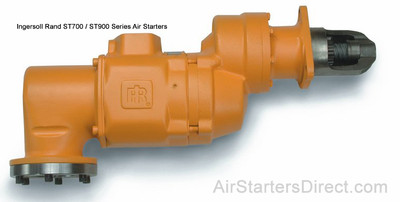
ST925BP03L32S-0G Turbine Air Starter by Ingersoll Rand
Ingersoll Rand
Price: Please Call For Pricing and AvailabilityGenuine Ingersoll Rand ST925BP03L32S-0G Air Starter.Features - Robust gearing handles extended crank cycles - Sealed for use in gas and air applications - Powerful 64 hp turbine motor uses no...Model Number ST925BP03L32S-0GOr call 1-800-353-4676
Price: Please Call For Pricing and Availability -


ST799GDDP09R51-P0S Turbine Air Starter by Ingersoll Rand
Ingersoll Rand
Price: Please Call For Pricing and AvailabilityThe Ingersoll Rand ST799GDDP09R51-P0S is a genuine IR ST700-series pre-engaged turbine air starter. It is the -P0S position-on-order build of the ST799GDDP09R51: the motor, gearing, flange and...Model Number ST799GDDP09R51-P0SOr call 1-800-353-4676
Price: Please Call For Pricing and Availability -
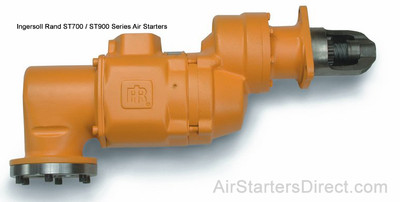

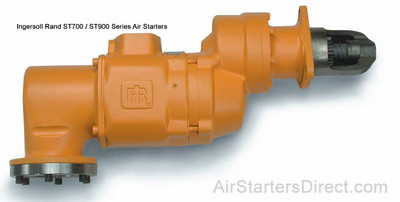
ST799GDDP09R51 Turbine Air Starter by Ingersoll Rand
Ingersoll Rand
Price: Please Call For Pricing and AvailabilityThe Ingersoll Rand ST799GDDP09R51 is a genuine IR ST700-series pre-engaged turbine air starter. It delivers up to 66 hp (49 kW) at 90 psi and has 3.44:1 "D" gearing. It has a full-arc (30 to 90 psi)...Model Number ST799GDDP09R51Or call 1-800-353-4676
Price: Please Call For Pricing and Availability -


ST799GDDP09L52-P0S Turbine Air Starter by Ingersoll Rand
Ingersoll Rand
Price: Please Call For Pricing and AvailabilityThe Ingersoll Rand ST799GDDP09L52-P0S is a genuine IR ST700-series pre-engaged turbine air starter. It is the -P0S position-on-order build of the ST799GDDP09L52: the motor, gearing, flange and...Model Number ST799GDDP09L52-P0SOr call 1-800-353-4676
Price: Please Call For Pricing and Availability -


ST799GDDP09L52 Turbine Air Starter by Ingersoll Rand
Ingersoll Rand
Price: Please Call For Pricing and AvailabilityThe Ingersoll Rand ST799GDDP09L52 is a genuine IR ST700-series pre-engaged turbine air starter. It delivers up to 66 hp (49 kW) at 90 psi and has 3.44:1 "D" gearing. It has a full-arc (30 to 90 psi)...Model Number ST799GDDP09L52Or call 1-800-353-4676
Price: Please Call For Pricing and Availability -


ST799GCDP03R51-P0S Turbine Air Starter by Ingersoll Rand
Ingersoll Rand
Price: $4,380.25The Ingersoll Rand ST799GCDP03R51-P0S is a genuine IR ST700-series pre-engaged turbine air starter. It is the -P0S position-on-order build of the ST799GCDP03R51: the motor, gearing, flange and...Model Number ST799GCDP03R51-P0SOr call 1-800-353-4676
Price: $4,380.25 -


ST799GCDP03R51-20 Turbine Air Starter by Ingersoll Rand
Ingersoll Rand
Price: $4,380.25The Ingersoll Rand ST799GCDP03R51-20 is a genuine IR ST700-series pre-engaged turbine air starter. It is the -20 orientation build of the ST799GCDP03R51: the motor, gearing, flange and pinion are...Model Number ST799GCDP03R51-20Or call 1-800-353-4676
Price: $4,380.25 -


ST799GCDP03R51 Turbine Air Starter by Ingersoll Rand
Ingersoll Rand
Price: $4,329.11The Ingersoll Rand ST799GCDP03R51 is a genuine IR ST700-series pre-engaged turbine air starter. It delivers up to 66 hp (49 kW) at 90 psi, 360 ft-lb of breakaway torque, and Ingersoll Rand rates...Model Number ST799GCDP03R51Or call 1-800-353-4676
Price: $4,329.11 -


ST799GCDP03R31-P0S Turbine Air Starter by Ingersoll Rand
Ingersoll Rand
Price: $4,380.25The Ingersoll Rand ST799GCDP03R31-P0S is a genuine IR ST700-series pre-engaged turbine air starter. It is the -P0S position-on-order build of the ST799GCDP03R31: the motor, gearing, flange and...Model Number ST799GCDP03R31-P0SOr call 1-800-353-4676
Price: $4,380.25 -

ST799GCDP03R31 Turbine Air Starter by Ingersoll Rand
Ingersoll Rand
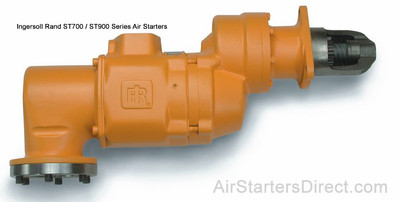
Price: $4,363.20The Ingersoll Rand ST799GCDP03R31 is a genuine IR ST700-series pre-engaged turbine air starter. It delivers up to 66 hp (49 kW) at 90 psi, 360 ft-lb of breakaway torque, and Ingersoll Rand rates...Model Number ST799GCDP03R31Or call 1-800-353-4676
Price: $4,363.20 -


ST799GCDP03R25-P0S Turbine Air Starter by Ingersoll Rand
Ingersoll Rand
Price: Please Call For Pricing and AvailabilityThe Ingersoll Rand ST799GCDP03R25-P0S is a genuine IR ST700-series pre-engaged turbine air starter. It is the -P0S position-on-order build of the ST799GCDP03R25: the motor, gearing, flange and...Model Number ST799GCDP03R25-P0SOr call 1-800-353-4676
Price: Please Call For Pricing and Availability -


ST799GCDP03R25-2E Turbine Air Starter by Ingersoll Rand
Ingersoll Rand
Price: $4,363.20The Ingersoll Rand ST799GCDP03R25-2E is a genuine IR ST700-series pre-engaged turbine air starter. It is the -2E orientation build of the ST799GCDP03R25: the motor, gearing, flange and pinion are...Model Number ST799GCDP03R25-2EOr call 1-800-353-4676
Price: $4,363.20 -

ST799GCDP03R25-1G Turbine Air Starter by Ingersoll Rand
Ingersoll Rand
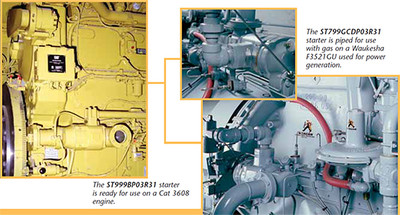
Price: Please Call For Pricing and AvailabilityThe Ingersoll Rand ST799GCDP03R25-1G is a genuine IR ST700-series pre-engaged turbine air starter. It is the -1G orientation build of the ST799GCDP03R25: the motor, gearing, flange and pinion are...Model Number ST799GCDP03R25-1GOr call 1-800-353-4676
Price: Please Call For Pricing and Availability -


ST799GCDP03L942-3P Turbine Air Starter by Ingersoll Rand
Ingersoll Rand
Price: $4,380.25The Ingersoll Rand ST799GCDP03L942-3P is a genuine IR ST700-series pre-engaged turbine air starter. It is the -3P orientation build of the ST799GCDP03L942: the motor, gearing, flange and pinion are...Model Number ST799GCDP03L942-3POr call 1-800-353-4676
Price: $4,380.25 -


ST799GCDP03L942 Turbine Air Starter by Ingersoll Rand
Ingersoll Rand
Price: Please Call For Pricing and AvailabilityThe Ingersoll Rand ST799GCDP03L942 is a genuine IR ST700-series pre-engaged turbine air starter. It delivers up to 66 hp (49 kW) at 90 psi, 360 ft-lb of breakaway torque, and Ingersoll Rand rates...Model Number ST799GCDP03L942Or call 1-800-353-4676
Price: Please Call For Pricing and Availability -


ST799GCDP03L92 Turbine Air Starter by Ingersoll Rand
Ingersoll Rand
Price: Please Call For Pricing and AvailabilityThe Ingersoll Rand ST799GCDP03L92 is a genuine IR ST700-series pre-engaged turbine air starter. It delivers up to 66 hp (49 kW) at 90 psi, 360 ft-lb of breakaway torque, and Ingersoll Rand rates...Model Number ST799GCDP03L92Or call 1-800-353-4676
Price: Please Call For Pricing and Availability -


ST799GCDP03L52-20 Turbine Air Starter by Ingersoll Rand
Ingersoll Rand
Price: $4,380.25The Ingersoll Rand ST799GCDP03L52-20 is a genuine IR ST700-series pre-engaged turbine air starter. It is the -20 orientation build of the ST799GCDP03L52: the motor, gearing, flange and pinion are...Model Number ST799GCDP03L52-20Or call 1-800-353-4676
Price: $4,380.25 -
ST799GCDP03L52 Turbine Air Starter by Ingersoll Rand
Ingersoll Rand
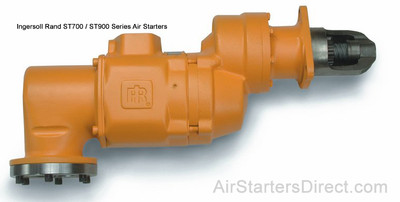
Price: $4,414.34The Ingersoll Rand ST799GCDP03L52 is a genuine IR ST700-series pre-engaged turbine air starter. It delivers up to 66 hp (49 kW) and 360 ft-lb of breakaway torque at 90 psi, and Ingersoll Rand rates...Model Number ST799GCDP03L52Or call 1-800-353-4676
Price: $4,414.34
Selection & sizing guide
How to Choose an Ingersoll Rand Turbine Air Starter
Ingersoll Rand turbine air starters crank diesel and gas engines from 5 to 320 liters (660 L carbureted) with a lube-free motor. This guide compares every series, shows which engine sizes each covers, and walks through sizing by displacement, cycle, fuel, air pressure and mounting.
Which Turbine Starter for Which Engine
| Model | Diesel engines | Max power | Max pressure | Air at max power | Engagement | Gas sealed | Status |
|---|---|---|---|---|---|---|---|
| 150TMG F | 8–27 L | 28 hp | 150 psi | 710 scfm | Inertia | Yes | Superseded (ST155FI) |
| 150TMP F | 8–27 L | 28 hp | 150 psi | 710 scfm | Pre-engaged | Yes | Superseded (ST155FP) |
| 150TLP F | 8–70 L | 28 hp | 90 psi | 780 scfm | Pre-engaged | Yes | Superseded (ST159FP) |
| ST155 | 11–90 L | 47 hp | 150 psi | 905 scfm | Pre-engaged or inertia | Yes | Current |
| ST159 | 11–90 L | 47 hp | 120 psi | 920 scfm | Pre-engaged | Yes | Current |
| ST400 | 5–60 L | 25 hp | 150 psi | 750 scfm | Pre-engaged | No | Current |
| ST455 | 5–60 L | 23 hp | 120 psi | 780 scfm | Pre-engaged | No | Current |
| ST499 | 5–60 L | 26 hp | 90 psi | 765 scfm | Pre-engaged | No | Current |
| ST544 | 8–100 L | 28 hp | 150 psi | 750 scfm | Pre-engaged | Yes | Current |
| ST599 | 8–100 L | 44 hp | 150 psi | 1,240 scfm | Pre-engaged | Yes | Current |
| ST650 | 16–80 L | 65 hp | 150 psi | 1,450 scfm | Pre-engaged | No | Current |
| ST699 | 16–80 L | 67 hp | 90 psi | 1,700 scfm | Pre-engaged | No | Current |
| ST750 / ST950 | 16–320 L | 55 hp | 150 psi | 1,300 scfm | Inertia or pre-engaged | Yes | Superseded (ST1060) |
| ST799 / ST999 | 16–320 L | 66 hp | 90 psi | 1,700 scfm | Inertia or pre-engaged | Yes | Superseded (ST1099) |
| ST1060 | 16–320 L | 70 hp | 150 psi | 1,290 scfm | Inertia or pre-engaged | Yes | Current |
| ST1099 | 16–320 L | 68 hp | 90 psi | 1,240 scfm | Inertia or pre-engaged | Yes | Current |
| ST2060 | 15–150 L | 70 hp | 150 psi | 1,290 scfm | Pre-engaged (inline) | BG versions | Current |
| ST2099 | 15–150 L | 68 hp | 90 psi | 1,240 scfm | Pre-engaged (inline) | BG versions | Current |
Ranges are Ingersoll Rand's for 4-stroke diesels. 2-stroke diesels: x1.5. Carbureted gas engines: x2. Hard-to-start engines or adverse conditions: go one size up.
How a Turbine Air Starter Works
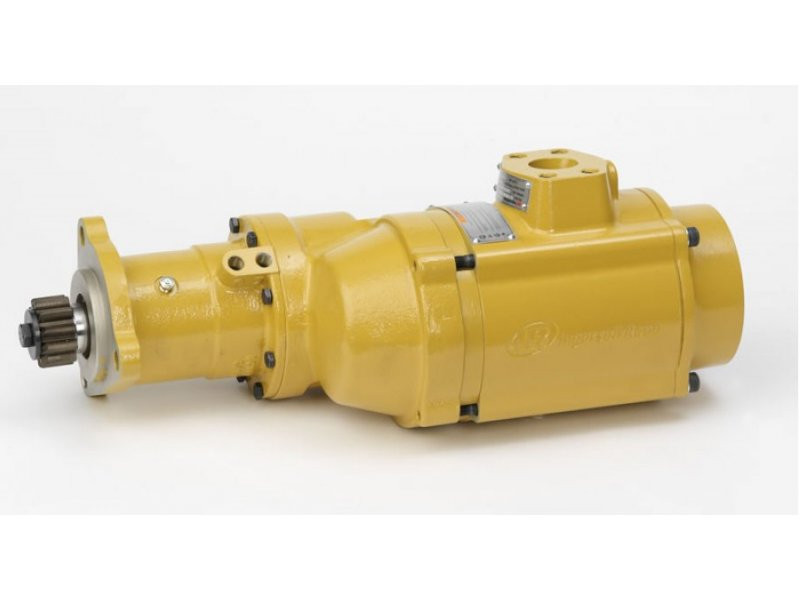
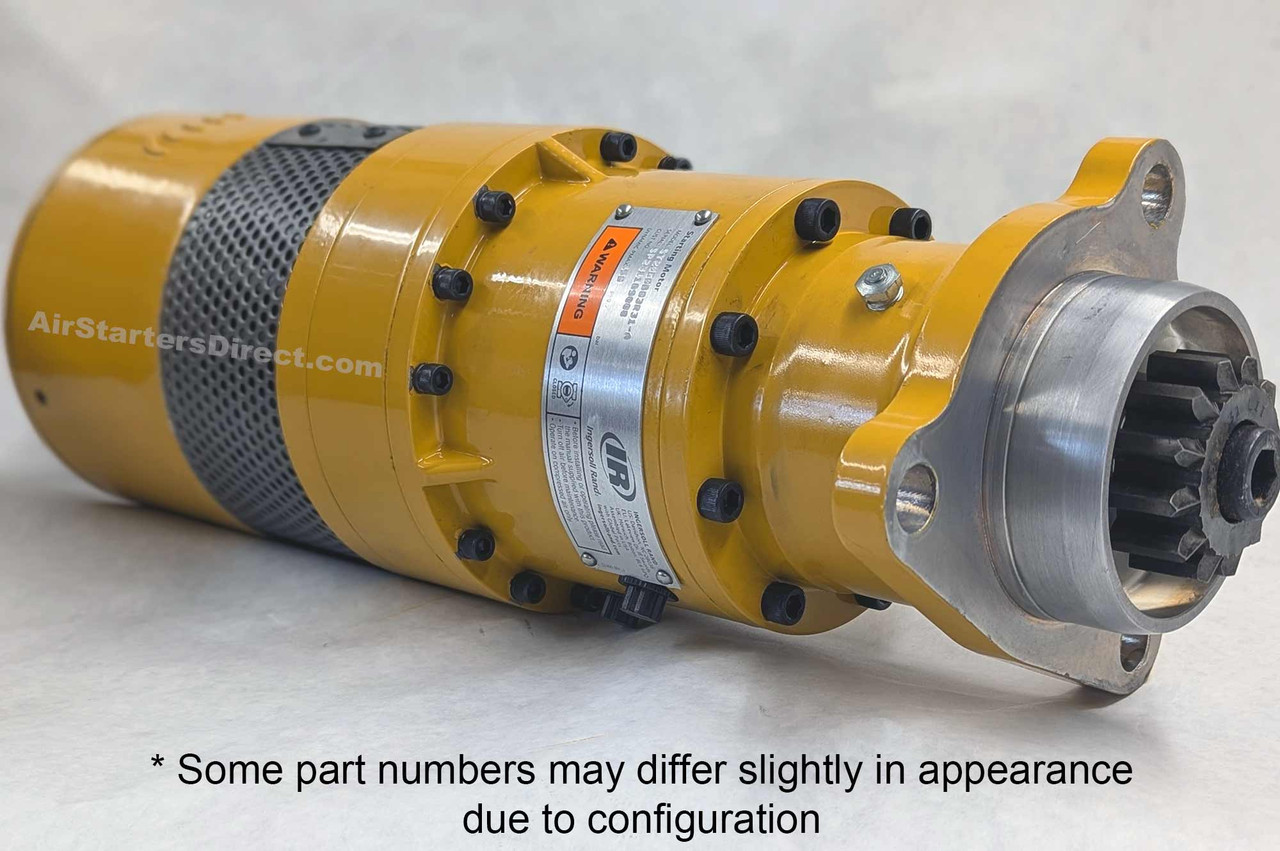
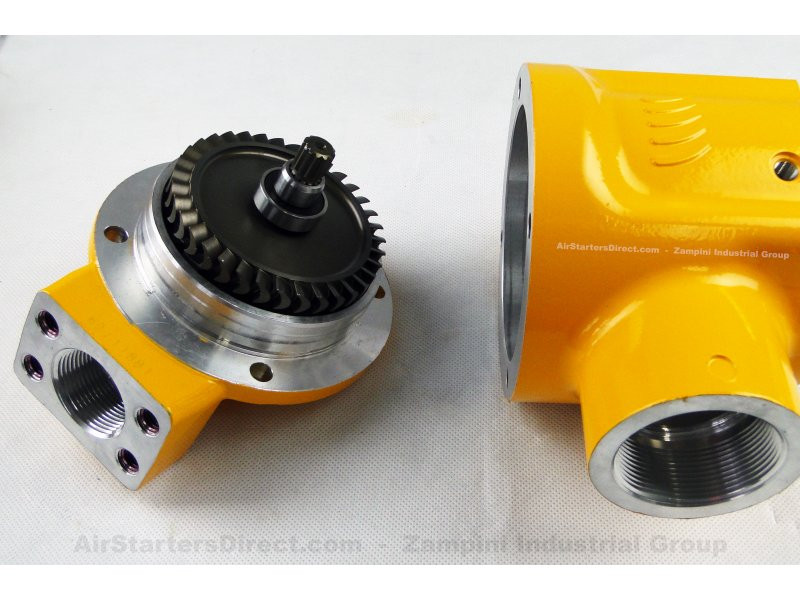
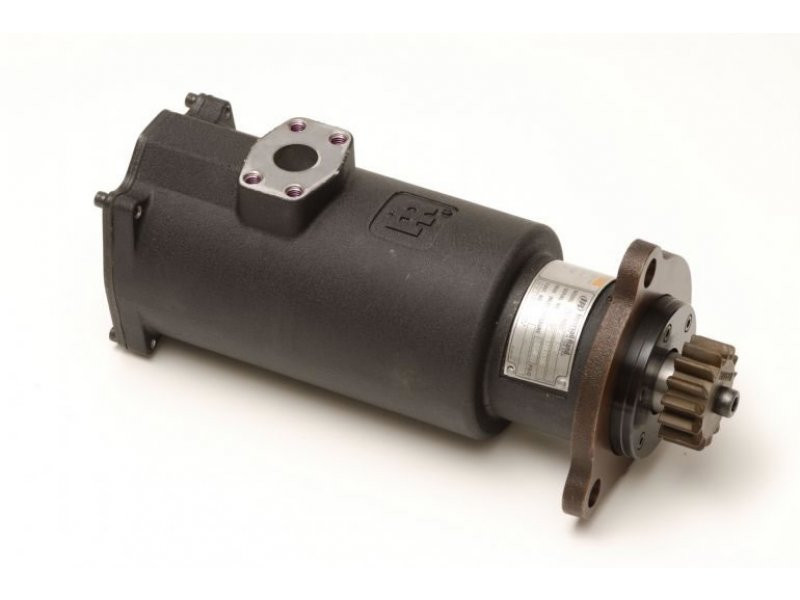
Ingersoll Rand turbine starters use a fully supported, high-speed rotor (not a cantilever), sealed oil-lubricated planetary gears and a modular motor that shares parts with its vane starters. Because nothing rubs inside the motor, there is no oil in the air supply and the exhaust is clean, and IR rates every current turbine series for extended cranking beyond 10 seconds.
Turbine vs Vane Starters
| Turbine starters | Vane starters | |
|---|---|---|
| Motor | Air expands through nozzles onto a turbine rotor | Sliding vanes in an offset rotor |
| Lubrication | None in the air supply (lube-free motor, sealed oil-bath gears) | Small amount of oil in the air (SS100 is lube-free) |
| Long cranking | Rated for extended starting (>10 seconds), except the ST700 | Not rated for extended starting in IR's selection guide |
| Power range | 23 to 70 hp per starter (TS gas-turbine starters to 146 hp) | 13.8 to 75 hp per starter |
| Engine range (diesel) | 5 to 320 L | Up to 320 L |
| Strengths | Light weight for the power, tolerant of dirty or wet air (ST1000 solid rotor) | High torque at low speed, simple design, long track record |
Both types start the same engines. Choose turbine for lube-free operation, long cranking or dirty and wet air; choose vane for high torque at low speed and a simple, proven design. Many engines in our Model Finder list one of each.
How to Size Any Air Starter
- Engine size and cycle. Find the displacement in liters (cu in ÷ 61.02). Ingersoll Rand's ranges are for 4-stroke diesels; for 2-stroke diesels multiply the range by 1.5, and for carbureted (spark-ignited gas) engines double it.
- Hard starts. IR's own rule: "For difficult-to-start engines or for operation under adverse conditions, use the next more powerful starter." Think cold climates, heavy driven loads, high compression or long idle periods.
- Supply pressure. Use a part-arc model for supplies up to 150 psi and the full-arc ("99") model for low-pressure supplies of 90 psi or less. Check the performance table at your pressure, not just the maximum.
- Air or gas. If the starter will run on natural gas, choose a gas-sealed version and pipe the exhaust away.
- Engagement. Pre-engaged: the drive pinion is completely engaged with the engine ring gear before the starter begins to crank the engine. Inertia: the rotating drive pinion engages the engine ring gear simultaneously with the initial cranking of the engine.
- Mounting. Match the flange, pinion (teeth, pitch, pressure angle) and rotation to the engine, or simply read them off the old starter's nameplate.
- Air supply. Make sure the receiver holds enough air for several start attempts at the starter's flow rate (see the calculator).
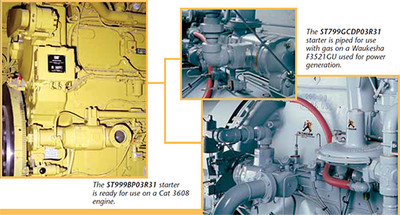
Typical Installation
Frequently Asked Questions
Why choose a turbine air starter?
No lubricator to fill, no oil in the exhaust, light weight for the power, and IR rates its current turbine series for cranking longer than 10 seconds. The ST1000's solid aluminum rotor is designed for harsh, contaminated environments.
What is the largest engine an Ingersoll Rand turbine starter can crank?
The ST1000 (D gear set) covers diesel engines up to 320 liters and carbureted gas engines up to 660 liters. Larger engines use two or more starters cranking together.
What does "arc" mean in a turbine model number?
The share of the turbine fed by the nozzles. Part-arc motors (44, 50, 60%) are for supplies up to 150 psi; full-arc "99" motors are for low-pressure supplies up to 90 psi and make similar power from less pressure.
Can turbine starters run on natural gas?
Most current IR turbine starters are sealed for gas (150T, ST150, ST500, ST1000, ST2000 BG). The ST400 and ST600 are air only.
Want us to confirm the size? Send your engine make, model and air supply pressure and an Ingersoll Rand specialist will match the starter, flange and pinion.
Category Questions & Answers
Turbine Air Starter Category Links

Updated turbine starter from Ingersoll Rand for engines from 16-95 liters

Powerful 70 hp turbine motor offers best-in-class performance in the harshest conditions!

NEWEST MODEL! Unlocks unprecedented productivity for engines ranging from 15 up to 150 liters!

Industrial duty air starter for engines 5 to 60 liters (Diesel). Commonly used in marine, trucking, transit, and oil & gas applications.

Industrial duty air starter for engines 16 to 80 liters (Diesel). Commonly used in mining and marine applications.

For engine displacement of: Diesel 16 to 320 liters Industry applications for the ST700 and ST900 Series starters - oil and gas, marine, power-gen, and transportation.

Industrial duty air starter for engines 5 to 60 liters (Diesel). Commonly used in marine, trucking, transit, and oil & gas applications.
Vane Air Starter, Gas Turbine Starter, and Engine Barring Motor Category Links

NEW! One Size fits engines up to 10+ liters.

For Diesel engines 8 - 32 liters.

Sealed for Gas applications.

For Diesel engines 3 to 20 liters.

For Diesel engines 16 - 320 liters.

For service work on diesel engines.
Questions? Need Help Finding The Right air Starter? Use Our Fast Response Form Below
