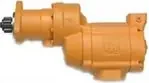
Selection & sizing guide
Ingersoll Rand Air Starter Sizing Guide
How to size an Ingersoll Rand air starter for any diesel or gas engine: Ingersoll Rand's displacement ratings for every series, the 2-stroke and gas-engine rules, performance at your supply pressure, air receiver sizing and the flange, pinion and rotation that make it fit.
Air Starter Sizing Calculator
Enter your engine and air supply. The calculator applies Ingersoll Rand's ratings and sizing rules and lists the current models that fit.
Enter an engine size to see the matching starters.
Air receiver estimate
Ingersoll Rand's Sizing Rules
- Engine size and cycle. Find the displacement in liters (cu in ÷ 61.02). Ingersoll Rand's ranges are for 4-stroke diesels; for 2-stroke diesels multiply the range by 1.5, and for carbureted (spark-ignited gas) engines double it.
- Hard starts. IR's own rule: "For difficult-to-start engines or for operation under adverse conditions, use the next more powerful starter." Think cold climates, heavy driven loads, high compression or long idle periods.
- Supply pressure. Use a part-arc model for supplies up to 150 psi and the full-arc ("99") model for low-pressure supplies of 90 psi or less. Check the performance table at your pressure, not just the maximum.
- Air or gas. If the starter will run on natural gas, choose a gas-sealed version and pipe the exhaust away.
- Engagement. Pre-engaged: the drive pinion is completely engaged with the engine ring gear before the starter begins to crank the engine. Inertia: the rotating drive pinion engages the engine ring gear simultaneously with the initial cranking of the engine.
- Mounting. Match the flange, pinion (teeth, pitch, pressure angle) and rotation to the engine, or simply read them off the old starter's nameplate.
- Air supply. Size the receiver for the number of start attempts you need (calculator above).
The rules come from the notes under Ingersoll Rand's turbine and vane selection guides: "These figures are only a guide. For difficult-to-start engines or for operation under adverse conditions, use the next more powerful starter." IR's own examples: a 150TMG rated for 27 L could be used on a 41 L 2-stroke diesel; a 150BMP could be used on a 54 L gas engine; an SS100 could be used on a 15 L 2-stroke diesel.
Sizing Chart: Every Series by Engine Size
Turbine Starters: Selection Table
| Model | Diesel engines | Max power | Max pressure | Air at max power | Engagement | Gas sealed | Status |
|---|---|---|---|---|---|---|---|
| 150TMG F | 8–27 L | 28 hp | 150 psi | 710 scfm | Inertia | Yes | Superseded (ST155FI) |
| 150TMP F | 8–27 L | 28 hp | 150 psi | 710 scfm | Pre-engaged | Yes | Superseded (ST155FP) |
| 150TLP F | 8–70 L | 28 hp | 90 psi | 780 scfm | Pre-engaged | Yes | Superseded (ST159FP) |
| ST155 | 11–90 L | 47 hp | 150 psi | 905 scfm | Pre-engaged or inertia | Yes | Current |
| ST159 | 11–90 L | 47 hp | 120 psi | 920 scfm | Pre-engaged | Yes | Current |
| ST400 | 5–60 L | 25 hp | 150 psi | 750 scfm | Pre-engaged | No | Current |
| ST455 | 5–60 L | 23 hp | 120 psi | 780 scfm | Pre-engaged | No | Current |
| ST499 | 5–60 L | 26 hp | 90 psi | 765 scfm | Pre-engaged | No | Current |
| ST544 | 8–100 L | 28 hp | 150 psi | 750 scfm | Pre-engaged | Yes | Current |
| ST599 | 8–100 L | 44 hp | 150 psi | 1,240 scfm | Pre-engaged | Yes | Current |
| ST650 | 16–80 L | 65 hp | 150 psi | 1,450 scfm | Pre-engaged | No | Current |
| ST699 | 16–80 L | 67 hp | 90 psi | 1,700 scfm | Pre-engaged | No | Current |
| ST750 / ST950 | 16–320 L | 55 hp | 150 psi | 1,300 scfm | Inertia or pre-engaged | Yes | Superseded (ST1060) |
| ST799 / ST999 | 16–320 L | 66 hp | 90 psi | 1,700 scfm | Inertia or pre-engaged | Yes | Superseded (ST1099) |
| ST1060 | 16–320 L | 70 hp | 150 psi | 1,290 scfm | Inertia or pre-engaged | Yes | Current |
| ST1099 | 16–320 L | 68 hp | 90 psi | 1,240 scfm | Inertia or pre-engaged | Yes | Current |
| ST2060 | 15–150 L | 70 hp | 150 psi | 1,290 scfm | Pre-engaged (inline) | BG versions | Current |
| ST2099 | 15–150 L | 68 hp | 90 psi | 1,240 scfm | Pre-engaged (inline) | BG versions | Current |
Vane Starters: Selection Table
| Model | Diesel engines | Max power | Max pressure | Air at max power | Engagement | Gas sealed | Status |
|---|---|---|---|---|---|---|---|
| SS100 | 0–10 L | 13.8 hp | 150 psi | 415 scfm | Pre-engaged | Yes | Current |
| SS175 | 3–10 L | 18 hp | 150 psi | 500 scfm | Pre-engaged | Yes | Superseded (SS100) |
| SS350 | 3–20 L | 36 hp | 150 psi | 900 scfm | Pre-engaged | Yes | Current |
| 150BMG E | 8–27 L | 32 hp | 150 psi | 680 scfm | Inertia | Yes | Current |
| 150BMP E | 8–27 L | 32 hp | 150 psi | 680 scfm | Pre-engaged | No | Current |
| 150BMP D | 15–32 L | 32 hp | 150 psi | 650 scfm | Pre-engaged | No | Current |
| SS810 | 16–130 L | 75 hp | 150 psi | 1,700 scfm | Inertia | Yes | Current |
| SS815 | 16–130 L | 75 hp | 150 psi | 1,700 scfm | Pre-engaged | Yes | Current |
| SS825 | 80–200 L | 75 hp | 150 psi | 1,700 scfm | Pre-engaged | Yes | Current |
| SS850 | 160–320 L | 75 hp | 150 psi | 1,275 scfm | Pre-engaged | Yes | Current |
Why Supply Pressure Matters
A starter's output falls quickly with pressure. Ingersoll Rand's ST1060 (B ratio) makes 70 hp at 150 psi but only 39 hp at 90 psi; the full-arc ST1099 makes 68 hp at 90 psi. If your receiver is charged to 90 psi or less, or the pressure drops a long way during cranking, choose the full-arc ("99") model.
| Supply pressure | ST1060 B | ST1099 B | SS815 | ST2060 |
|---|---|---|---|---|
| 30 psi | 7 hp | 13 hp | – | 8 hp |
| 60 psi | 20 hp | 36 hp | – | 23 hp |
| 90 psi | 39 hp | 68 hp | 45 hp | 40 hp |
| 120 psi | 53 hp | – | 58 hp | 55 hp |
| 150 psi | 70 hp | – | 75 hp | 70 hp |
Sizing the Air Receiver
Every start draws air out of the receiver. The free air (at atmospheric pressure) a receiver can deliver is its volume times the pressure drop you allow, divided by atmospheric pressure:
Free air (cu ft) = Receiver volume (cu ft) × (Start pressure − End pressure) ÷ 14.7
The air a start needs is the starter's flow at maximum power (scfm, from the tables) times the cranking time in minutes, times the number of attempts you want in reserve. Because flow falls with pressure, using the maximum-power figure gives a conservative (larger) receiver. 1 cu ft = 7.48 US gallons = 28.3 liters.
| Starter | Flow at max power | Air per second | 3 x 5 s attempts | Receiver, 150 to 90 psi |
|---|---|---|---|---|
| SS100 | 415 scfm | 6.9 scf | 104 scf | 25 cu ft (190 gal) |
| SS350 | 900 scfm | 15 scf | 225 scf | 55 cu ft (412 gal) |
| 150BMP E | 680 scfm | 11.3 scf | 170 scf | 42 cu ft (312 gal) |
| SS815 | 1,700 scfm | 28.3 scf | 425 scf | 104 cu ft (779 gal) |
| ST155 | 905 scfm | 15.1 scf | 226 scf | 55 cu ft (415 gal) |
| ST400 | 750 scfm | 12.5 scf | 188 scf | 46 cu ft (344 gal) |
| ST544 | 750 scfm | 12.5 scf | 188 scf | 46 cu ft (344 gal) |
| ST599 | 1,240 scfm | 20.7 scf | 310 scf | 76 cu ft (568 gal) |
| ST650 | 1,450 scfm | 24.2 scf | 363 scf | 89 cu ft (664 gal) |
| ST1060 | 1,290 scfm | 21.5 scf | 323 scf | 79 cu ft (591 gal) |
| ST2060 | 1,290 scfm | 21.5 scf | 323 scf | 79 cu ft (591 gal) |
Flange, Pinion and Rotation
Once the series is chosen, the model must fit the engine: SAE mounting flange (No. 1, 3 or 4, or IR's 09 for D-ratio units), the pinion that meshes with the ring gear (tooth count, diametral pitch or module, pressure angle) and the rotation. The quickest way to get all three right is the model number on the starter you are replacing; every series page explains its model code.
| Flange code | Meaning | Used on |
|---|---|---|
| 00 | Cradle mount | ST400 |
| 01 | SAE No. 1 | SS100, SS350, ST400, ST500 |
| 03 | SAE No. 3 | Almost all series |
| 04 | SAE No. 4 | SS100 |
| 09 | SAE 09 (large, D-ratio units) | SS850, ST1000 D, ST700/ST900 D |
| 24, 26 | Mitsubishi pattern | ST500 |
| GM | GM pattern | SS100 |
| 88, 81 (150 series) | Pre-engaged drive housing on an SAE No. 3 flange | 150BMP, 150T, ST150 |
| 21, 22, 12 (150 series) | Inertia drive housing | 150BMG, 150TMG, ST155FI |
Ingersoll Rand Documents
Frequently Asked Questions
How do I size an air starter for my engine?
Start from the engine displacement in liters. Find the Ingersoll Rand series whose diesel range covers it, multiplying the range by 1.5 for 2-stroke diesels or 2 for carbureted gas engines, and go one size up for hard-starting engines or adverse conditions. Then choose the model for your supply pressure and the flange, pinion and rotation for your engine.
What happens if the starter is too small?
It cranks too slowly to start the engine reliably, especially when cold, and long cranking drains the receiver. IR's advice is to step up to the next more powerful starter for difficult-to-start engines.
How big should my air tank be?
Large enough for several start attempts at the starter's air flow. Use the formula and calculator on this page; for example an ST1060 needs roughly 79 cu ft (about 590 gallons) for three 5-second attempts from 150 down to 90 psi, a conservative estimate.
Can I run an air starter on natural gas?
Yes, with a gas-sealed model and the exhaust piped away. Many Ingersoll Rand series are sealed for gas; the ST400 and ST600 are air only.
Turbine or vane: which is better?
Neither is better for every engine. Turbine starters are lube-free and rated for extended cranking; vane starters give high torque at low speed with a simple design. Both are sized the same way.
Want us to confirm the size? Send your engine make, model and air supply pressure and an Ingersoll Rand specialist will match the starter, flange and pinion.
Turbine Air Starter Category Links

Updated turbine starter from Ingersoll Rand for engines from 16-95 liters.
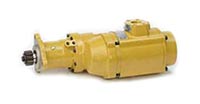
Powerful 70 hp turbine motor offers best-in-class performance in the harshest conditions!
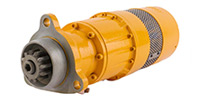
NEWEST MODEL! Unlocks unprecedented productivity for engines ranging from 15 up to 150 liters!
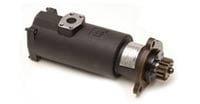
Industrial duty air starter for engines 5 to 60 liters (Diesel). Commonly used in marine, trucking, transit, and oil & gas applications.
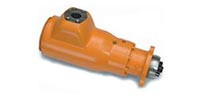
Industrial duty air starter for engines 16 to 80 liters (Diesel). Commonly used in mining and marine applications.

For engine displacement of: Diesel 16 to 320 liters Industry applications for the ST700 and ST900 Series starters - oil and gas, marine, power-gen, and transportation.

Industrial duty air starter for engines 5 to 60 liters (Diesel). Commonly used in marine, trucking, transit, and oil & gas applications.
Vane Air Starter, Gas Turbine Starter, and Engine Barring Motor Category Links

NEW! One Size fits engines up to 10+ liters.

For Diesel engines 8 - 32 liters.

Sealed for Gas applications.

For Diesel engines 3 to 20 liters.

For Diesel engines 16 - 320 liters.

For service work on diesel engines.
Questions? Need Help Finding The Right air Starter? Use Our Fast Response Form Below